
This post contains affiliate links. If you buy through our links, we may earn a small commission at no extra cost to you.
Raking leaves the wrong way turns a 2-hour job into a 4-hour job — and a backache. Here’s the efficient method, the right tools, and what to actually do with the leaves after.
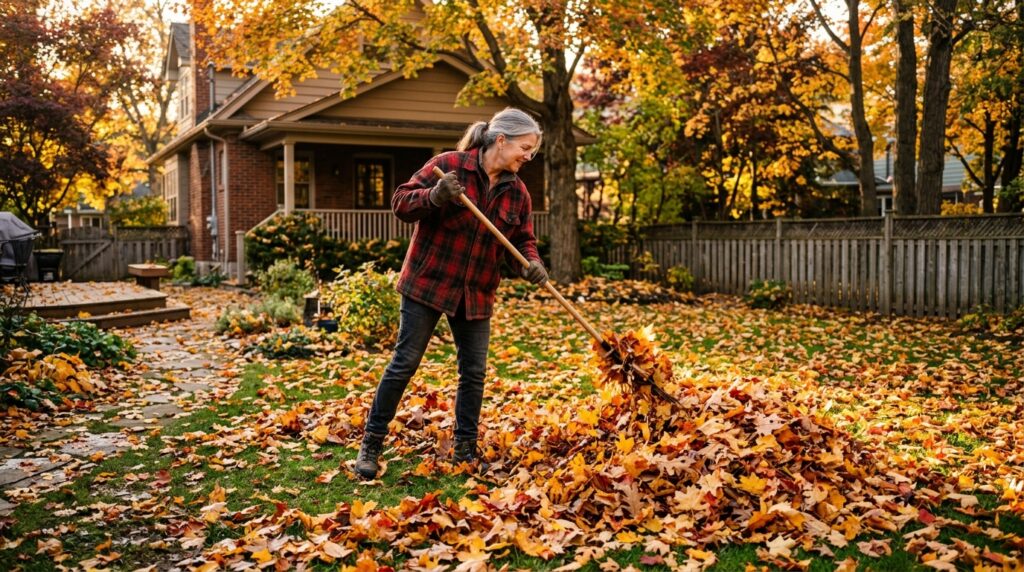
Raking leaves is straightforward — but most homeowners make it harder than it needs to be. Wrong rake size, working against the wind, bending at the waist instead of the knees, no plan for leaf disposal. Small adjustments in technique cut the time in half and eliminate the next-day back pain.
This guide covers the efficient raking method, the right tool for your yard size, and the best options for what to do with leaves once they’re piled up.
Quick answer: Rake with the wind at your back, work in rows from the farthest point toward your disposal area, use a wide fan rake for open areas and a smaller rake near beds and fences, and tarp the leaves to the street or compost pile rather than bagging them one pile at a time.
⭐ Essential Product:
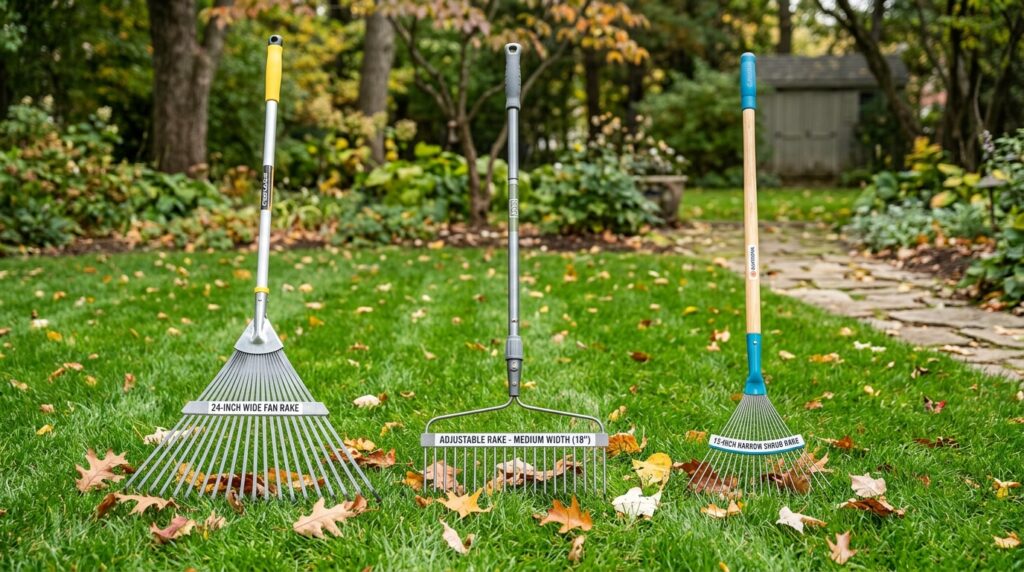
Tabor Tools Adjustable Leaf Rake — 63-inch handle (reduces bending), adjustable head width from 7 to 23 inches, works in tight spaces and open lawn. Around $28. The adjustable head is the key feature — wide for open lawn, narrow for around shrubs and fence lines without buying two rakes.
The Right Tool for Your Yard
Choosing the right rake eliminates the most common source of inefficiency — fighting the tool.
| Yard Size | Best Tool | Why |
|---|---|---|
| Small (under 1/4 acre) | 24-inch fan rake | Covers ground fast, easy to control |
| Medium (1/4 to 1/2 acre) | Adjustable rake or 30-inch fan rake | Wider coverage, fewer passes |
| Large (over 1/2 acre) | Leaf blower + rake | Blower moves bulk, rake finishes edges |
| Near flower beds | 12-inch shrub rake | Won’t damage plants or pull mulch |
Rake materials:
- Metal tines: More durable, better for wet or heavy leaves
- Plastic tines: Lighter, easier on hands, fine for dry leaves
- Bamboo: Gentle on lawn surface, good for light leaf cover
Our Pick — Leaf Blower (large yards): Greenworks 40V Cordless Leaf Blower — 150 MPH airspeed, battery-powered (no cord), 40-minute runtime. Around $100. Moves leaves 3–4x faster than raking alone for yards over half an acre.
Step 1: Check the Forecast and Wait for the Right Conditions
Best conditions for raking:
- Dry leaves (wet leaves are 3–4x heavier and stick together)
- Light wind or no wind — or wind at your back
- After most leaves have fallen (late October to November for most of the US)
Worst conditions:
- Rain in the last 24 hours (leaves stick and clump)
- Strong wind (undoes your work)
- Before peak leaf fall (you’ll rake twice)
Timing tip: In most northern US states, 80% of leaves fall within a 2–3 week window in October–November. Waiting for that window and raking once is more efficient than raking three times as leaves fall gradually.
Step 2: Plan Your Disposal Before You Start
The most common raking mistake is not having a plan for the leaves. Nothing kills momentum faster than finishing a huge pile and having nowhere to put it.
Options — pick one before you start:
Mulch in Place (Best Option for Most Lawns)
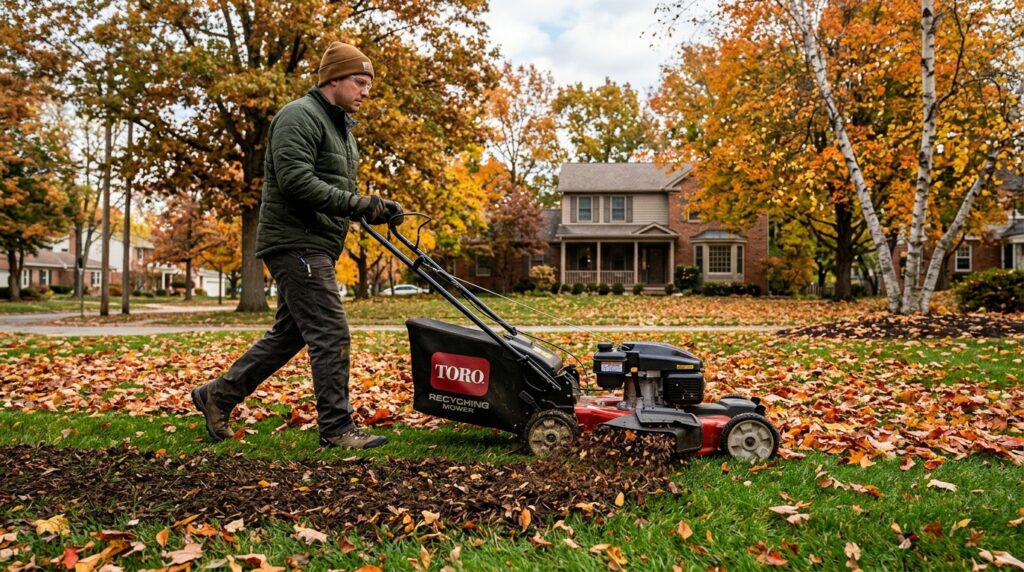
Run a mulching mower over the leaves instead of raking. The mower shreds leaves into small pieces that fall between grass blades and decompose over winter, returning nutrients to the soil. This works when leaf cover is light to moderate — not more than 6 inches deep.
No bags, no hauling, no disposal. Takes 30 minutes instead of 3 hours.
Compost
Rake leaves into a compost pile or bin. Leaves are “brown” material (carbon-rich) — balance with green material (grass clippings, kitchen scraps) for active composting. Shredded leaves decompose significantly faster than whole leaves.
Yard Waste Bags for Curbside Pickup
Check your municipality’s yard waste schedule — most areas pick up bagged leaves in fall. Use paper yard waste bags (not plastic — most municipalities require paper for composting). Fill loosely to avoid bags tearing.
Our Pick: Kraft Paper Lawn and Leaf Bags 30-gallon (10-pack) — heavy-duty kraft paper, holds shape when filling, biodegradable. Around $12 for 10.
Tarp Method (Fastest for Large Volumes)
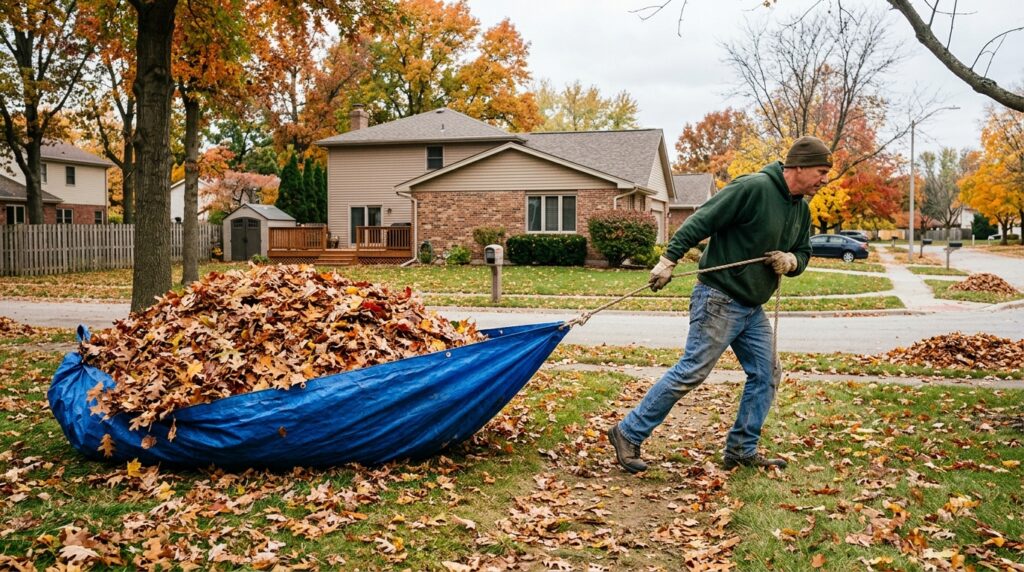
Rake leaves onto a large tarp, drag the tarp to the compost pile or street, dump, repeat. Eliminates the inefficiency of bending to bag leaves. A 6×8 ft tarp holds more than 10 yard waste bags worth of leaves in one load.
Step 3: Rake Efficiently — The Right Technique
Work With the Wind
Always rake with the wind at your back. Raking into the wind moves leaves back onto areas you’ve already cleared. Check wind direction before starting and position your disposal area downwind.
Work in Rows, Far to Near
Start at the far end of your yard and rake toward your disposal area in parallel rows — like mowing. This keeps cleared areas clear and gives you a single direction of progress.
Use Your Body Correctly
The most common source of back pain from raking:
- Bending at the waist to pick up leaves
- Using too-short a rake handle (forces bending)
- Twisting the spine to throw leaves
Correct technique:
- Stand upright, rake handle near shoulder height
- Use a pushing/pulling motion, not a throwing motion
- Squat (not bend) to pick up leaves or move piles
- Switch your hand position every 10–15 minutes — alternate which hand leads
Create One Large Pile, Not Many Small Ones
Rake everything into one central pile (or onto a tarp) rather than creating multiple small piles across the yard. Consolidating is faster than making and moving multiple piles.
Step 4: Handle Leaves Near Beds and Fences
Leaves pack tightly against fences and in garden beds and require different tools and technique.
Fence lines: Use a narrow shrub rake or your hands for the last 6–12 inches against the fence. A leaf blower on low setting clears fence lines quickly without damaging the fence.
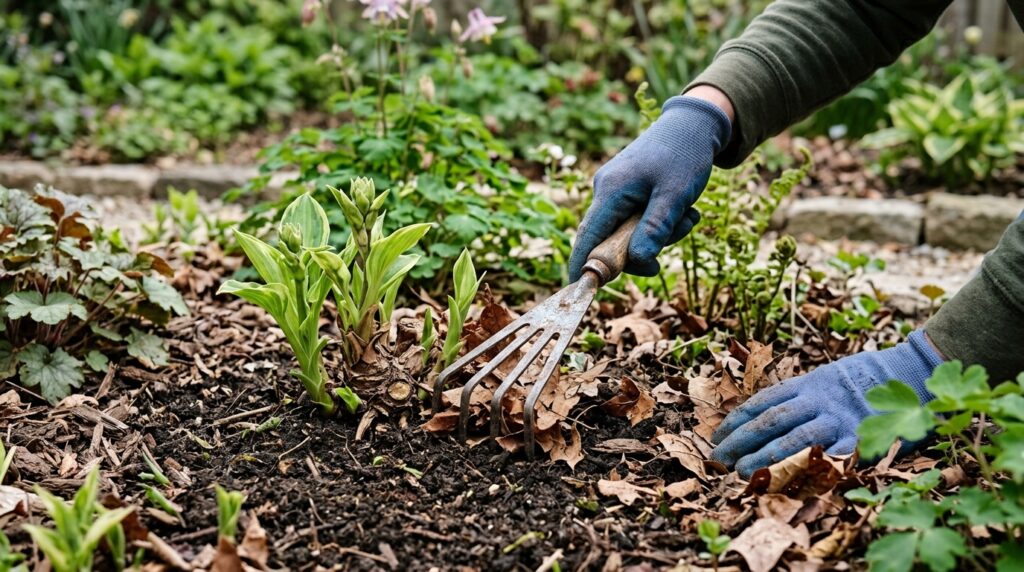
Garden beds: Blow or rake leaves off the soil surface — leaves packed over perennial plants can cause crown rot over winter. A thin layer (1–2 inches) of shredded leaves as mulch is beneficial; thick unshredded piles are not.
Under shrubs and hedges: Use a small hand rake or gloved hands. Leaf blowers damage mulch and light soil under shrubs — manual removal is faster here.
Step 5: Gutters Last
After raking the yard, check and clean the gutters. Yard raking dislodges debris that lands on the roof and washes into gutters. Doing gutters before raking means you’ll knock more debris down onto your clean lawn.
For the full gutter cleaning process, see our guide on how to clean gutters.
Raking Efficiency Checklist
Before starting:
Checked forecast — dry conditions, minimal wind
Identified wind direction
Chosen disposal method (mulch, compost, curbside, tarp)
Tarp or bags ready before starting
Correct rake size for yard and areas
During raking:
Working with wind at back
Moving far to near in rows
Raking into one large pile or onto tarp
Switching hand position every 15 minutes
Using narrow rake near beds and fences
After raking:
Leaves disposed of or composted
Gutters checked and cleaned
Garden beds checked — thick leaf piles removed from crowns
Frequently Asked Questions
Is it better to rake leaves or mulch them? Mulching is better for the lawn in almost every case. Shredded leaves decompose over winter and return nitrogen, potassium, and organic matter to the soil — essentially free fertilizer. Raking removes those nutrients. Mulch when leaf cover is light to moderate; rake when leaves are too deep for the mower to shred effectively (more than 6 inches).
How often should I rake in fall? Once or twice, ideally. Wait until most leaves have fallen (typically late October to mid-November for most of the US), then do one thorough raking. A second pass 2–3 weeks later catches the stragglers. Raking every weekend as leaves fall gradually is less efficient than two concentrated sessions.
Are leaves bad for my lawn if I leave them? A thin layer of leaves (under 1 inch) decomposes without issue. A thick layer blocks sunlight, traps moisture, and can kill grass underneath over winter — particularly in areas that get snow and stay wet. Shred with a mower before leaving in place, or remove thick accumulations.
What’s the fastest way to rake a large yard? Leaf blower + tarp method. Use the blower to move bulk leaves into rows or piles, rake the edges, drag the tarp to disposal. For very large yards (over 1 acre), a lawn tractor with a leaf collection attachment is the fastest option.
Can I put leaves in the trash? Most municipalities don’t allow leaves in regular trash — they require separate yard waste bags or curbside leaf pickup. Check your local waste management schedule. Composting or mulching in place avoids the disposal problem entirely.
The Bottom Line
Efficient leaf raking comes down to three things: right conditions (dry, low wind), right technique (rows, wind at back, tarp instead of bags), and a disposal plan decided before you start. Mulching in place with a mower is faster than raking for most lawns — consider it before defaulting to raking.
If leaves have already clogged your gutters, tackle those next — our guide on how to clean gutters covers the full process safely and efficiently.
Have questions about your specific yard situation? Leave a comment below.
Related posts: