
This post contains affiliate links. If you buy through our links, we may earn a small commission at no extra cost to you.
Grass seed fails for three reasons: wrong timing, no soil contact, or inconsistent watering. Here’s how to avoid all three and get thick, even germination from the first seeding.
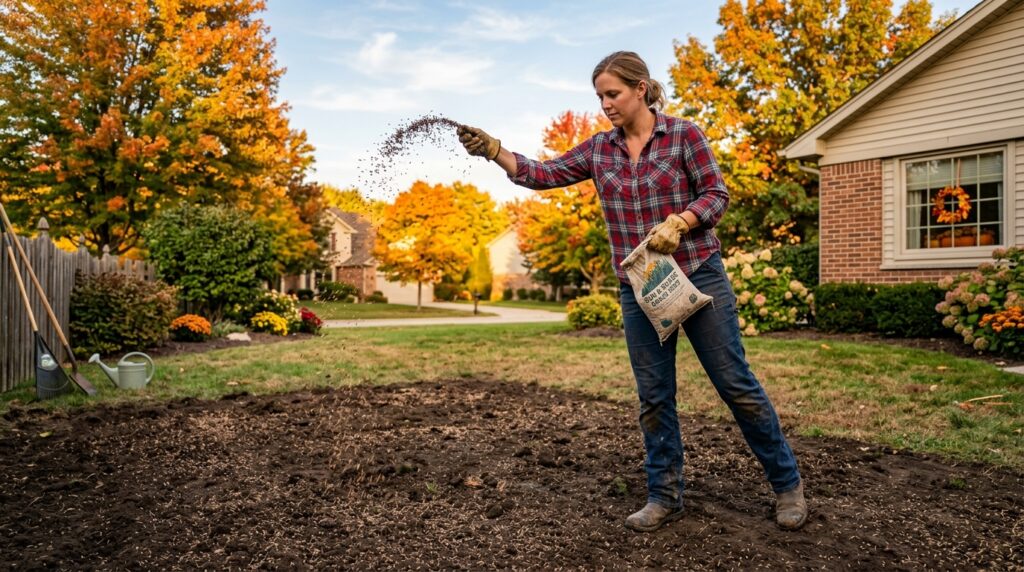
Planting grass seed sounds simple — spread seed, water it, wait. But most first-time seedings fail because of three specific mistakes: wrong timing for the grass type, poor seed-to-soil contact, or inconsistent watering during the germination window.
Get those three things right and grass seed germinates reliably. Get any one of them wrong and you’ll be reseeding in six weeks.
Quick answer: Prepare the soil (loosen the top inch, remove debris), spread seed at the correct rate for your grass type, apply starter fertilizer, keep the seed bed consistently moist for 2–4 weeks, and don’t mow until new grass reaches 3.5 inches. The preparation determines 80% of the outcome.
⭐ Essential Product:
Scotts Turf Builder Grass Seed Sun & Shade Mix — blend of Kentucky bluegrass, fescue, and ryegrass, covers full sun to dense shade, germinates in 5–21 days depending on conditions. Around $28 for 3 lbs (covers 1,200 sq ft for new lawns). The best all-purpose cool-season seed for northern US lawns.
For warm-season lawns (South): Pennington Bermuda Grass Seed — heat and drought tolerant, spreads to fill bare areas, best for lawns south of the transition zone. Around $20 for 5 lbs.
Essential: Scotts Turf Builder Starter Food for New Grass — high phosphorus formula that promotes root development in new seedlings. Around $20. Apply at seeding, not after germination.
Step 1: Choose the Right Seed and Timing
This is where most failed seedings start — wrong seed for the region, or right seed at the wrong time of year.
Cool-Season Grasses (Northern US)
Types: Kentucky Bluegrass, Tall Fescue, Fine Fescue, Perennial Ryegrass Best planting time: Late summer to early fall (mid-August through October) Why: Soil is warm, air is cooling, fall rains help, minimal weed competition Second best: Early spring (March–April) — works but competes with crabgrass
Warm-Season Grasses (Southern US)
Types: Bermuda, Zoysia, Centipede, St. Augustine, Bahia Best planting time: Late spring to early summer (May–June) Why: Soil temperature needs to be above 65°F for germination Never plant in fall — warm-season seed won’t germinate in cooling soil
Transition Zone (VA, KY, MO, KS, OK)
Both cool and warm-season grasses grow here. Match whatever grass type you already have, or choose tall fescue — the most adaptable grass for the transition zone.
Check soil temperature, not air temperature. Grass seed germinates based on soil temp, not the weather forecast. Use a soil thermometer 2–3 inches deep. Cool-season seed needs 50–65°F soil; warm-season needs above 65°F.
Step 2: Prepare the Soil
Soil preparation determines whether seed germinates or just sits on the surface.
New Lawn Area (Bare Soil)
- Remove rocks, debris, and any existing vegetation
- Till or loosen the soil 4–6 inches deep with a rototiller or garden fork
- Rake to break up clumps and create a level surface
- Grade away from the house — slope should direct water away from the foundation
- Firm the surface lightly by rolling or tamping — seed needs firm contact, not loose fluffy soil
Overseeding Thin or Bare Spots
- Mow existing lawn short (1–1.5 inches)
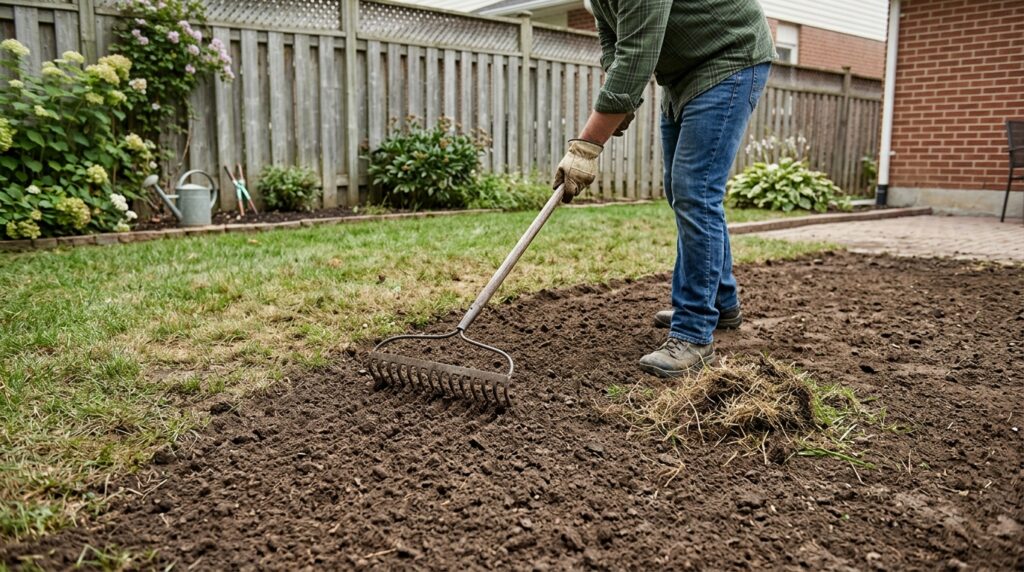
- Rake aggressively to remove thatch and expose soil
- Loosen bare areas with a garden rake, hand cultivator, or core aerator
- The goal: visible soil contact for the seed to land on — not seed sitting on top of thatch
Seed on thatch = failed germination. Thatch insulates seed from soil moisture and prevents roots from reaching soil. If you can’t see bare soil after raking, rake harder.
Step 3: Test and Amend Your Soil (Optional but Valuable)
Grass grows best in soil with a pH of 6.0–7.0. Outside this range, grass struggles even with perfect seeding technique — nutrient uptake is impaired at wrong pH levels.
A basic soil test ($10–$15 at a garden center) tells you pH and nutrient levels. Results come back with specific amendment recommendations.
Common amendments:
- Lime: raises pH (makes acidic soil more neutral) — apply in fall, takes 2–3 months to take effect
- Sulfur: lowers pH (makes alkaline soil more neutral)
- Compost: improves soil structure and adds organic matter — top dress 1/4 inch before seeding
If you’re planting now and haven’t tested, proceed — you can always amend next season based on how the lawn performs.
Step 4: Spread the Seed
Calculate How Much Seed You Need
Check the bag for seeding rate:
- New lawn rate: higher — typically 4–8 lbs per 1,000 sq ft
- Overseeding rate: lower — typically 2–4 lbs per 1,000 sq ft
Measure your area (length × width) and calculate. Round up — running short mid-application leaves thin strips.
Buy from a single dye lot — seed from different lots can have subtle color variation that shows as uneven green tones as the lawn establishes.
Spreading Method
Hand spreader: Best for small areas (under 500 sq ft) and spot repairs. Walk slowly and overlap slightly.
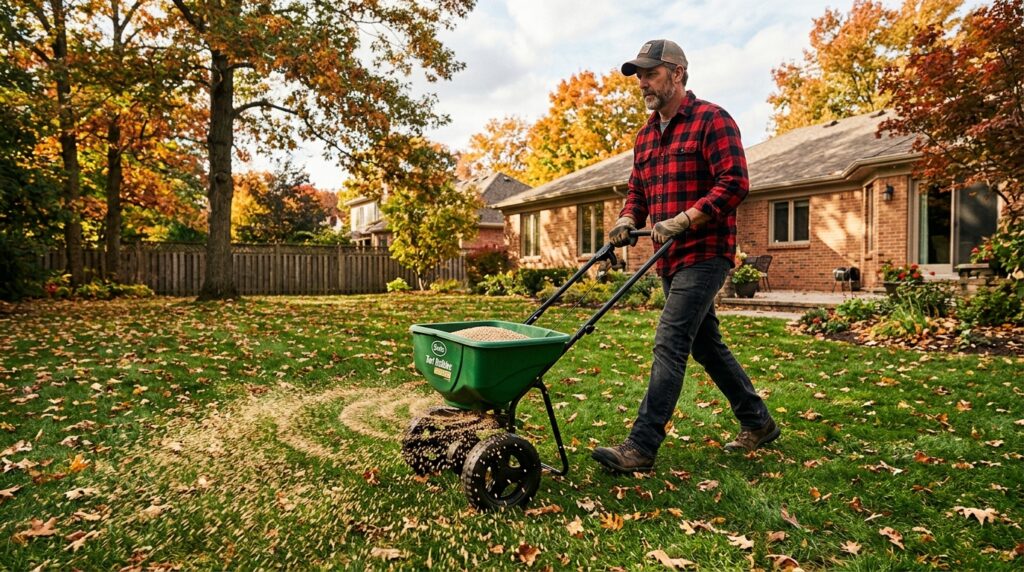
Broadcast spreader (walk-behind): Best for areas over 500 sq ft. Set to the rate on the bag. Apply half the seed in one direction, then the other half perpendicular — cross-pattern prevents striping.
Our Pick — Spreader: Scotts Turf Builder EdgeGuard Mini Broadcast Spreader — holds up to 5,000 sq ft of seed, edge guard prevents seed from landing in beds and on pavement. Around $35.
After Spreading
Lightly rake the seeded area to improve seed-to-soil contact. The goal is to get seed 1/4 inch below the surface — not buried deeper, not just sitting on top.
Alternatively, roll the area with a lawn roller to press seed into soil contact without burying it.
Step 5: Apply Starter Fertilizer
Apply starter fertilizer at the same time as seeding — either before or immediately after spreading seed.
Starter fertilizer is high in phosphorus (the middle number in N-P-K), which promotes root development in germinating seed. Standard lawn fertilizer is high in nitrogen, which promotes leaf growth and can burn young seedlings.
Apply at the bag’s recommended rate. Don’t over-apply — more fertilizer does not mean faster germination.
Step 6: Water — The Critical Window
Watering during germination is where most seeding projects succeed or fail. New grass seed needs consistent moisture to germinate, but not drowning.
Germination Watering Schedule
Days 1–14 (until germination):
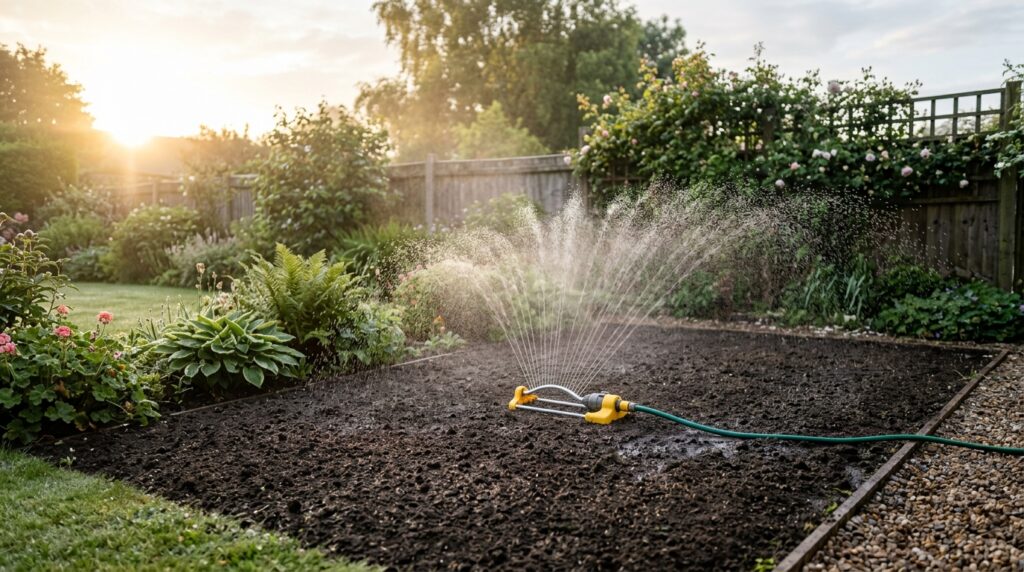
- Water lightly 2–3 times per day
- Keep the top 1/2 inch of soil consistently moist
- Brief, frequent watering — the goal is surface moisture, not deep saturation
- Do not let the seed bed dry out — even one day without moisture kills germinating seed
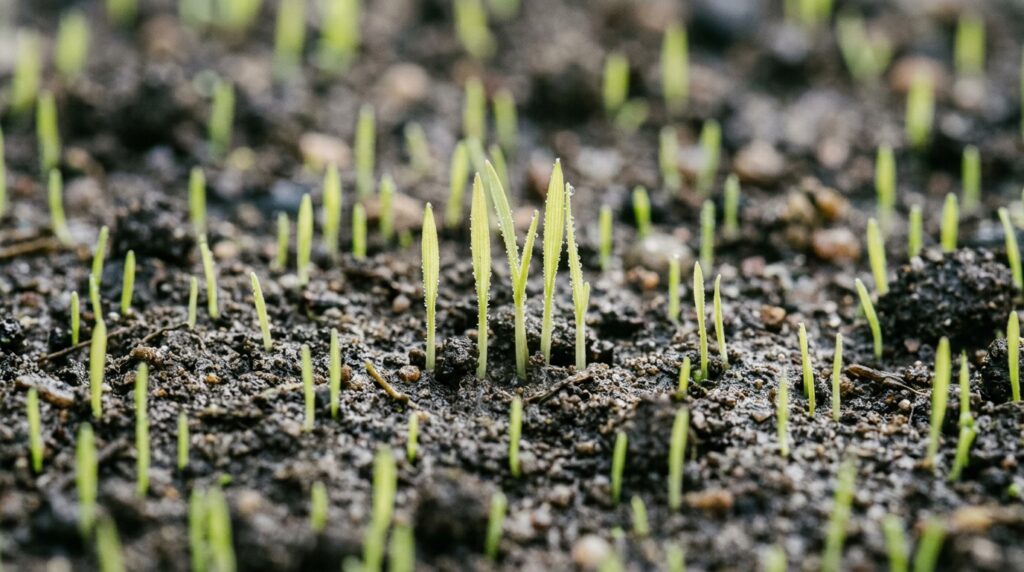
Days 14–28 (after germination, seedlings visible):
- Reduce to once daily, deeper watering
- Encourage roots to grow deeper by watering longer but less frequently
After first mow (week 4–6):
- Transition to normal lawn watering — deep and infrequent (1 inch per week)
A single dry day during germination can kill seed that has already cracked open. Set a phone reminder for morning and afternoon watering if you’re relying on manual watering. An automatic sprinkler timer is worth setting up for seeding projects.
Step 7: First Mow and Long-Term Care
Wait until new grass reaches 3–3.5 inches before mowing. Mowing too early tears seedlings from the soil by their shallow roots.
For the first mow:
- Set the blade high — remove only the top 1/3 of the blade height
- Keep foot traffic off the seeded area until after the first mow
After the first mow:
- Apply a second round of starter fertilizer 4–6 weeks after the first application
- Transition to a regular watering schedule (1 inch per week, deeply and infrequently)
Grass Seed Quick Checklist
Before seeding:
Correct grass type identified for region
Timing confirmed (cool-season: fall; warm-season: late spring)
Soil prepared — bare soil visible after raking
Soil pH tested (optional but recommended)
Seeding rate calculated, correct amount purchased
Seeding:
Seed spread at correct rate (new lawn or overseeding rate)
Cross-pattern application for even coverage
Seed lightly raked or rolled for soil contact
Starter fertilizer applied
Germination window:
Watered 2–3x daily until germination
Seed bed never allowed to dry out
Foot traffic kept off seeded area
After germination:
Watering reduced to once daily after seedlings appear
First mow only when new grass reaches 3.5 inches
Second fertilizer application at 4–6 weeks
Germination Timeline by Grass Type
| Grass Type | Germination Time | Notes |
|---|---|---|
| Perennial Ryegrass | 5–10 days | Fastest germinator — often mixed with bluegrass |
| Tall Fescue | 7–14 days | Good for transition zone, heat tolerant |
| Kentucky Bluegrass | 14–30 days | Slow but spreads via rhizomes to fill in |
| Bermuda | 10–30 days | Needs warm soil — fails in cool conditions |
| Zoysia | 14–21 days | Very slow to establish but durable once mature |
| Centipede | 14–21 days | Low maintenance once established |
Kentucky Bluegrass is the most commonly abandoned seeding — homeowners give up at day 20 thinking it failed. Wait the full 30 days before reseeding.
Frequently Asked Questions
Can I plant grass seed in summer? For cool-season grasses, summer seeding is the worst timing — heat stress, drought, and peak weed competition combine to create very low germination rates. Wait for late summer/early fall (soil still warm, air cooling). For warm-season grasses, summer is the right time.
How much does it cost to seed a lawn yourself? Seed typically costs $0.05–$0.15 per square foot. A 1,000 sq ft area costs $50–$150 in seed plus $20 in starter fertilizer. Professional seeding of the same area runs $300–$600. DIY saves $200–$400 for a half-day of work.
My grass seed isn’t germinating after 2 weeks. What’s wrong? Check four things: soil temperature (too cold for cool-season seed?), moisture consistency (did the seed bed dry out for even one day?), seed age (old seed has low germination rates — check the “test date” on the bag), and seed-to-soil contact (seed sitting on thatch won’t germinate regardless of watering).
Should I cover grass seed with straw? A thin layer of straw mulch helps retain moisture and prevents seed from washing away on slopes — useful in hot, dry conditions. Keep it thin — you should still see soil through the straw. Remove once seedlings are 1 inch tall. Don’t use hay (contains weed seeds).
How do I keep birds from eating my grass seed? Birds eat some seed but rarely enough to meaningfully affect germination density. If bird pressure is heavy, cover the seeded area with bird netting or floating row cover for the first week. The thin straw mulch method also reduces bird access while retaining moisture.
The Bottom Line
Planting grass seed successfully comes down to three things: right timing for your grass type, direct seed-to-soil contact after soil preparation, and daily moisture during the 2–4 week germination window. Miss any one of them and you’ll be reseeding.
Fall is the window for cool-season grasses — the single most impactful timing decision you can make. For a related process with more detail on overseeding an existing lawn, our guide on how to reseed a lawn covers the spot-repair approach for thin or patchy areas.
Have questions about your specific grass or soil situation? Leave a comment below.
Related posts: