
This post contains affiliate links. If you buy through our links, we may earn a small commission at no extra cost to you.
Your toilet is clogged, the water is rising, and there’s no plunger in the bathroom. It’s one of those moments where you need a solution right now.
Good news: there are several methods that work without a plunger — some using things you already have in the kitchen. They’re ranked below from easiest to most involved, so start at the top and work your way down.
Quick answer: Start with dish soap and hot (not boiling) water — pour a generous squirt of dish soap into the bowl, follow with a gallon of hot water from waist height, and wait 10–15 minutes. This clears most simple toilet clogs. If that fails, try baking soda and vinegar, then a wire hanger snake. Then buy a flange plunger — it’s the real fix for any future clogs.
Before You Start: Stop the Overflow Risk
If water is rising toward the rim, act immediately before trying any unclogging method:
- Remove the tank lid and push the flapper down — this stops more water from entering the bowl
- Turn off the water supply valve — it’s behind the toilet near the floor, turn it clockwise
- Don’t flush again — a second flush on a clogged toilet almost always causes overflow
⚠️ Never flush a clogged toilet a second time. The bowl has nowhere to drain and will overflow. Stop the flow at the tank first, then work on clearing the clog.
Method 1: Dish Soap and Hot Water
Best for: soft clogs, organic matter, toilet paper buildup — clears about 60% of common toilet clogs
This is your first move. Dish soap lubricates the clog and helps it slide through the drain; hot water adds weight and pressure to push it along.
Step 1: Squirt a generous amount of dish soap into the toilet bowl — about ¼ cup. Let it sink to the bottom of the bowl and sit for 5 minutes.
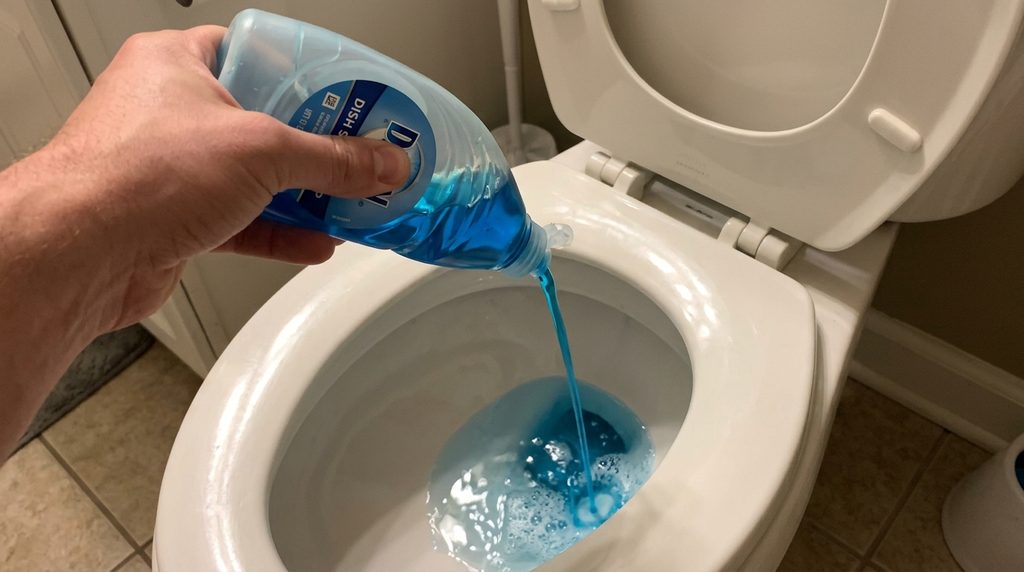
Step 2: Heat a gallon of water until hot but not boiling. Boiling water can crack a porcelain toilet bowl. Hot tap water plus a few minutes on the stove is the right temperature — it should be uncomfortable to touch but not scalding.
Step 3: Pour the hot water into the bowl from waist height in a steady stream. The height adds pressure. Don’t splash — aim for the center of the bowl.
Step 4: Wait 10–15 minutes. The soap and heat work together to soften and lubricate the clog. You should see the water level gradually drop as the clog clears.
Step 5: Flush to test. If the water drains normally, you’re done. If not, repeat once more or move to Method 2.
💡 Pro tip: Shampoo or hand soap works as a substitute if you don’t have dish soap nearby. Any slippery soap product will do the job.
Method 2: Baking Soda and Vinegar
Best for: partial clogs, slow drains, clogs that didn’t respond fully to Method 1
The baking soda and vinegar reaction creates fizzing that can help break up and dislodge clogs. It’s less powerful than a plunger but works well on softer blockages.
Step 1: Pour 1 cup of baking soda directly into the toilet bowl.
Step 2: Follow with 1–2 cups of white vinegar. Pour slowly — the reaction will fizz and you don’t want it to overflow the bowl.
Step 3: Let the mixture sit and fizz for 20–30 minutes.
Step 4: Pour a gallon of hot water into the bowl to flush the loosened clog through.
Step 5: Flush to test. If water drains freely, the clog is clear.
⚠️ Don’t use this method if you’ve already added any chemical drain cleaner to the bowl. Mixing chemicals can create dangerous reactions. Stick to one method at a time.
Method 3: A Wire Hanger Snake
Best for: clogs caused by objects (toys, excessive paper, wipes) that are reachable in the trap
A straightened wire coat hanger can act as a basic drain snake to physically break up or retrieve a clog in the toilet trap — the curved section just below the bowl.
Step 1: Unwind a wire coat hanger and straighten it as much as possible. Bend one end into a small hook.
Step 2: Wrap the hooked end with a rag or tape to protect the porcelain from scratches.
Step 3: Insert the wrapped end into the drain opening and push gently into the trap. Rotate and push to break up the clog, or hook and pull to retrieve an object.
Step 4: Pull out whatever you find. Flush to test drainage.
💡 Pro tip: This method works best for retrieving objects that have fallen in — a toy, a bar of soap, excessive wipes. For soft clogs made of paper and organic matter, the soap method is usually more effective.
Method 4: Enzyme Drain Cleaner
Best for: slow drains, recurring clogs, as a preventive treatment — not ideal for urgent situations
Enzyme-based drain cleaners use bacteria to digest organic material. They’re safe for pipes and septic systems, but they work slowly — usually overnight — so this isn’t the method for an urgent overflow situation.
How to use: Pour the recommended amount into the toilet bowl, let it sit overnight without flushing, then flush in the morning. For recurring slow drains, a monthly treatment prevents buildup.
🔗 Our Top Pick: Natural Elements Enzyme Drain Cleaner (Amazon)
⚠️ Avoid chemical drain cleaners like Drano in toilets. They’re formulated for sinks and can damage toilet internals, crack porcelain from heat, and create dangerous fumes in an enclosed bathroom. Enzyme cleaners are the safe alternative.
Method 5: Get a Plunger (The Real Fix)
Let’s be direct: a good flange plunger clears toilet clogs in 2 minutes and works on virtually any blockage. If you don’t own one, this situation is a good reminder to get one.
Not all plungers are equal. The flat cup plunger (the classic red rubber one) is designed for sinks — it doesn’t seal properly against a toilet drain. A flange plunger has an extended rubber lip that fits into the toilet drain opening and creates a real seal.
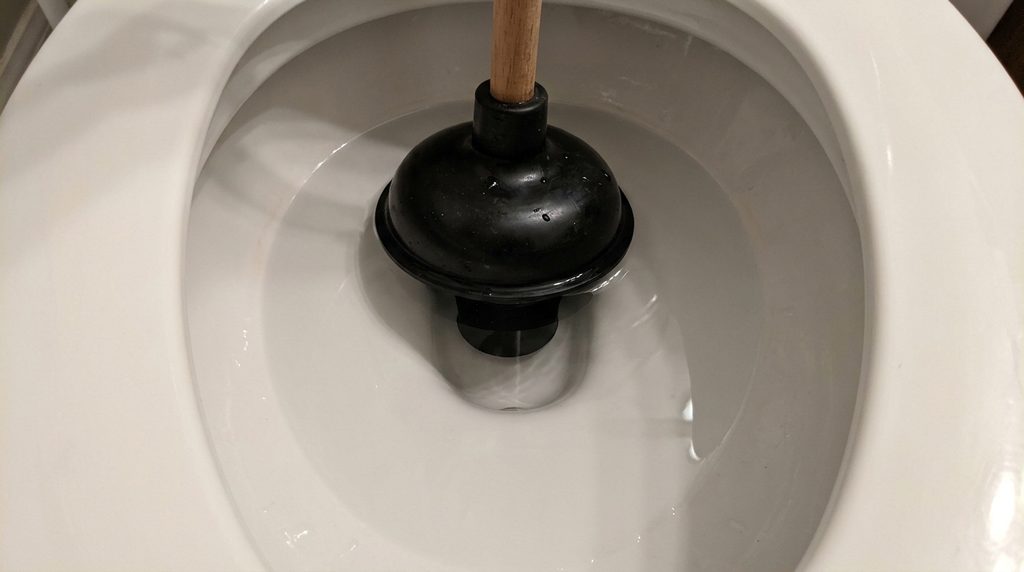
🔗 Our Top Pick: Korky 96-4AM Beehive Max Universal Plunger (Amazon)
How to use a flange plunger correctly: Insert the flange into the drain opening. Push down slowly to expel air without splashing, then pull up sharply. Repeat 10–15 times with a consistent pumping motion. The suction and pressure combination dislodges virtually any toilet clog.
💡 Pro tip: Run the plunger under hot water for 30 seconds before using — it softens the rubber and improves the seal against the drain.
When to Call a Plumber
Most toilet clogs clear with the methods above. Call a plumber when:
- Multiple methods have failed and the toilet still won’t drain
- Other drains in the house are also slow or gurgling — indicates a main line clog
- You can see or smell sewage backing up into other fixtures
- The toilet has been clogged repeatedly in the same week — may indicate a deeper obstruction
- You suspect something rigid (like a toy or phone) is lodged in the trap and can’t be retrieved
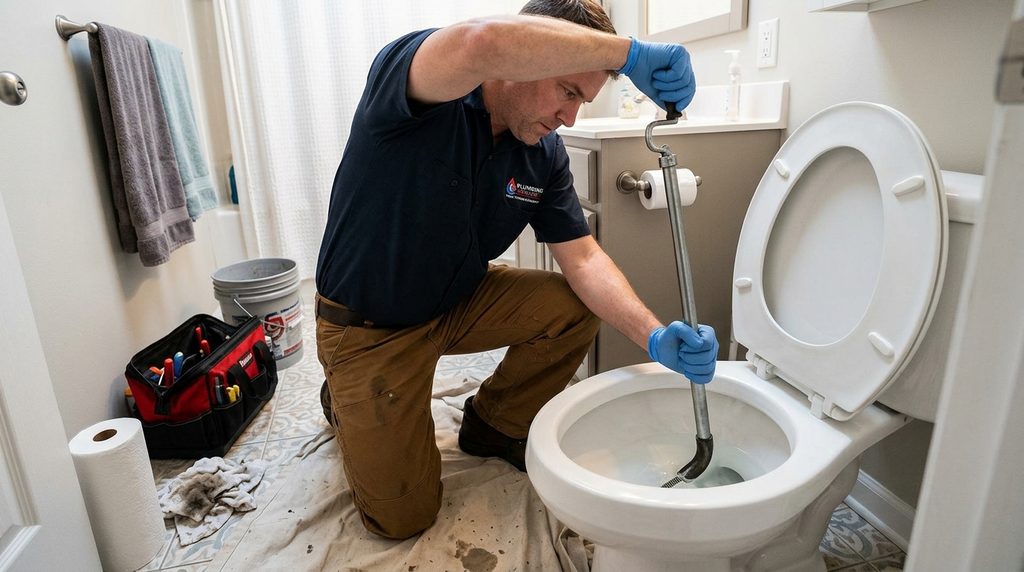
A plumber with a professional auger can clear clogs that household methods can’t reach. For main line issues, hydrojetting may be required.
| Method | Best for | Time needed | Effectiveness |
| Dish soap + hot water | Soft clogs, paper buildup | 15–20 min | High for simple clogs |
| Baking soda + vinegar | Partial clogs, slow drains | 30–45 min | Moderate |
| Wire hanger snake | Objects in trap | 10–15 min | High for object retrieval |
| Enzyme cleaner | Preventive, slow drains | Overnight | Low for urgent clogs |
| Flange plunger | Any toilet clog | 2–5 min | Very high |
Frequently Asked Questions
Can I use Drano to unclog a toilet?
No — Drano and most chemical drain cleaners are not designed for toilets. They generate heat as part of their chemical reaction, which can crack porcelain and damage the rubber components inside the toilet. They can also create dangerous fumes in a small enclosed bathroom. Use enzyme cleaners or mechanical methods instead.
How long can you leave a clogged toilet?
Don’t leave it more than a few hours if possible. A clog left overnight can harden and become significantly harder to clear. More importantly, if there’s any water in the bowl, there’s bacteria present — the sooner it’s cleared and flushed, the better. Turn off the water supply valve if you need to leave it temporarily.
Will a toilet eventually unclog itself?
Sometimes — if the clog is made entirely of toilet paper, the paper will eventually dissolve in water and the clog will clear on its own in a few hours. Clogs involving wipes (even ‘flushable’ ones), organic matter, or objects won’t clear on their own. Don’t count on it — try Method 1 first, it takes 20 minutes and works most of the time.
What causes toilets to clog repeatedly?
Recurring clogs usually mean one of three things: too much toilet paper per flush, ‘flushable’ wipes being flushed (they don’t break down like paper), or a partial obstruction deeper in the drain or main line. Switching to thinner toilet paper, eliminating wipes, and reducing paper volume per flush solves most recurring clog issues. If it continues, a plumber with an auger can check for a deeper problem.
Is it safe to flush paper towels down the toilet?
No — paper towels don’t dissolve in water the way toilet paper does. They’re designed to be strong when wet. Even one or two paper towels can cause a clog. The same applies to facial tissues, baby wipes, cleaning wipes, cotton balls, and anything labeled ‘flushable’ that isn’t specifically toilet paper.
The Bottom Line
For most toilet clogs, dish soap and hot water is your first move — it’s fast, uses things you already have, and clears the majority of common clogs. If that doesn’t work, the wire hanger or baking soda method usually finishes the job.
Long term: a flange plunger under the bathroom sink solves this problem permanently. It costs under $20 and takes 2 minutes to use. Every bathroom should have one.
Related posts (internal links):