
This post contains affiliate links. If you buy through our links, we may earn a small commission at no extra cost to you.
Weeds are a symptom, not just a problem. Pull them out or spray them and they come right back — because the conditions that let them thrive in the first place haven’t changed.
The good news: once you understand what’s actually going on, getting rid of lawn weeds permanently is straightforward. It’s a combination of killing what’s there now and making your lawn thick enough that weeds can’t get a foothold.
Here’s how to do both.
Quick answer: For existing weeds: pull broadleaf weeds by hand or spot-treat with a selective herbicide like Ortho Weed B Gon. For grassy weeds, use a selective grass herbicide or dig them out. For prevention: apply pre-emergent herbicide in early spring and fall, and overseed thin areas so weeds can’t establish.
Why You Have Weeds (and Why Killing Them Isn’t Enough)
Weeds move into lawns because there’s space for them. Thin grass, compacted soil, bare patches, and low mowing all create openings that weed seeds exploit.
The most common causes of chronic weed problems:
- Thin or patchy grass — bare soil is an open invitation for weed seeds
- Mowing too short — scalping the lawn stresses grass and gives weeds a light advantage
- Compacted soil — grass roots struggle, weeds (especially dandelions) thrive
- Improper watering — shallow, frequent watering encourages shallow roots and weak turf
- Poor soil nutrition — underfertilized lawns grow slowly and can’t compete with weeds
Herbicides kill weeds temporarily. A thick, healthy lawn crowds them out permanently. The methods below do both — eliminate what’s there now and fix the conditions that created the problem.
Identify Your Weed First (Broadleaf vs. Grassy Weeds)
This matters because different weed types require different treatments. Using the wrong product won’t work and can damage your lawn.
| Weed type | Examples | What to use |
| Broadleaf weeds | Dandelion, clover, chickweed, plantain, thistle | Selective broadleaf herbicide (safe for grass) |
| Grassy weeds | Crabgrass, nutsedge, quackgrass, annual bluegrass | Selective grass herbicide or manual removal |
| Sedges | Yellow nutsedge, purple nutsedge | Sedge-specific herbicide (nutsedicide) |
Broadleaf weeds are the easiest to treat — most selective herbicides kill them without harming your grass. Grassy weeds are trickier because herbicides that kill them can also harm desirable grass if not used carefully.
💡 Pro tip: Not sure what you have? Take a photo and use the iNaturalist app or Google Lens to identify the weed before buying any product.
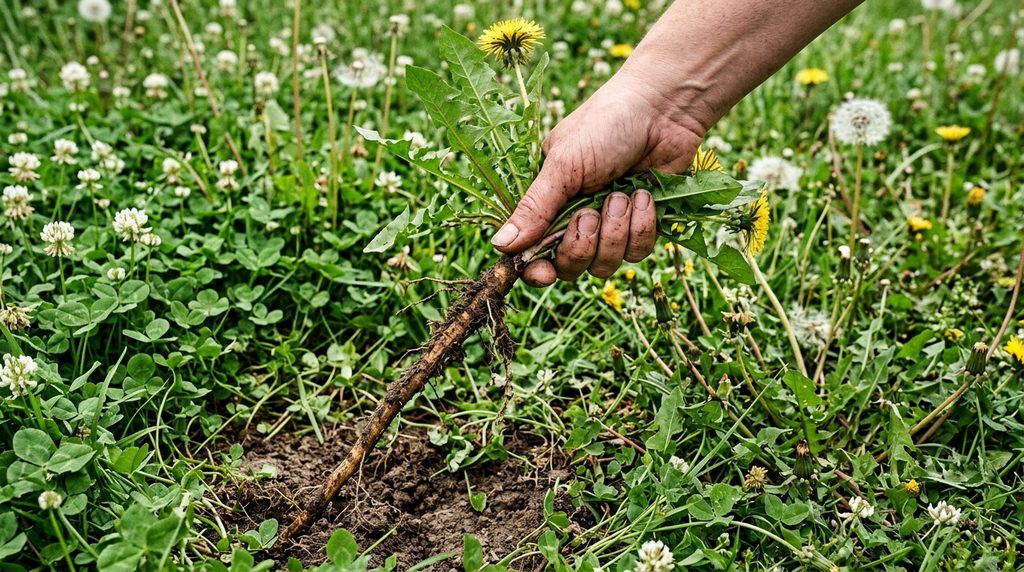
Method 1: Pull Them by Hand (Best for Small Infestations)
For a handful of weeds scattered through an otherwise healthy lawn, hand-pulling is the fastest and most targeted approach. No chemicals, no risk of lawn damage.
The right technique: Pull weeds after rain or watering, when soil is soft. Grip the weed at the base and pull slowly and steadily — you want to get the entire root, not just break it off at the surface. Dandelions and other taprooted weeds will regrow from even a small piece of root left behind.
A weed puller tool makes this much easier, especially for deep-rooted weeds. It leverages out the entire root without you having to get on your knees.
🔗 Our Top Pick: Walensee Weed Puller (Amazon)
After pulling: Fill the bare spot with grass seed and keep it watered. An empty patch will just fill with the next weed seed that lands there.
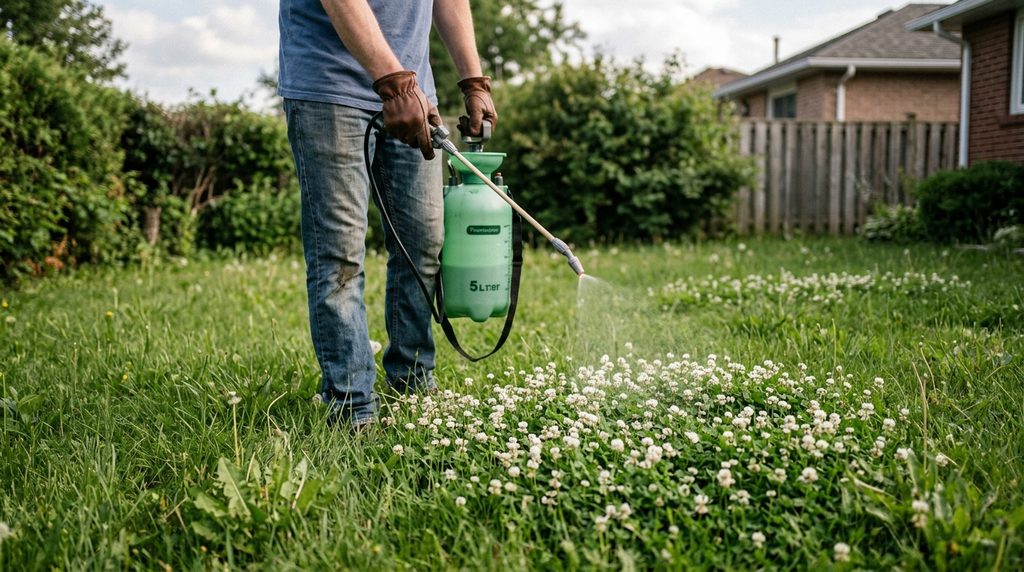
Method 2: Spot-Treat with Herbicide
For larger infestations or weeds that are hard to pull (like clover, which spreads by runners), a selective herbicide is the most efficient approach.
Selective vs. non-selective: Always use a selective herbicide on lawns — one that targets weeds but leaves grass unharmed. Non-selective herbicides (like Roundup) kill everything, including your grass.
For broadleaf weeds (dandelions, clover, plantain): Ortho Weed B Gon is the standard product. It kills over 250 broadleaf weeds without harming most grass types. Apply when weeds are actively growing and temperatures are between 45–90°F.
🔗 Our Top Pick: Ortho WeedClear Lawn Weed Killer (Amazon)
⚠️ Don’t apply herbicide when rain is forecast within 24 hours, or when temperatures exceed 90°F — both reduce effectiveness and can increase the risk of grass damage.
For grassy weeds (crabgrass): Post-emergent crabgrass killers work on young crabgrass but are less effective on mature plants. If crabgrass is already large and going to seed, focus on pre-emergent next season instead.
Application tips: Spot-treat individual weeds rather than broadcasting over the whole lawn. Use a pump sprayer for precise application. Don’t mow for 2–3 days before or after treating — you want the herbicide to stay on the weed leaves long enough to absorb.
Method 3: Pre-Emergent Herbicide (Stop Weeds Before They Sprout)
Pre-emergent herbicides are the most powerful tool for weed prevention. They work by creating a chemical barrier in the soil that prevents weed seeds from germinating — not by killing existing weeds.
| Target weed | Application timing | Product to use |
| Crabgrass (annual grassy weed) | Early spring, soil temp 50–55°F (before forsythia blooms) | Scotts Halts Crabgrass Preventer |
| Broadleaf winter annuals (chickweed, henbit) | Early fall (September) | Pre-emergent with pendimethalin |
| General weed prevention | Spring + fall applications | Scotts Turf Builder with Halts |
🔗 Our Top Pick: Scotts Halts Crabgrass & Grassy Weed Preventer (Amazon)
⚠️ Do NOT apply pre-emergent if you’re planning to overseed within 8–12 weeks. Pre-emergent prevents ALL seeds from germinating — including grass seed. Apply in spring, overseed in fall, or vice versa.
💡 Pro tip: The forsythia timing trick: crabgrass germinates at the same soil temperature as forsythia blooms. When you see forsythia flowering in your neighborhood, it’s time to apply crabgrass pre-emergent.
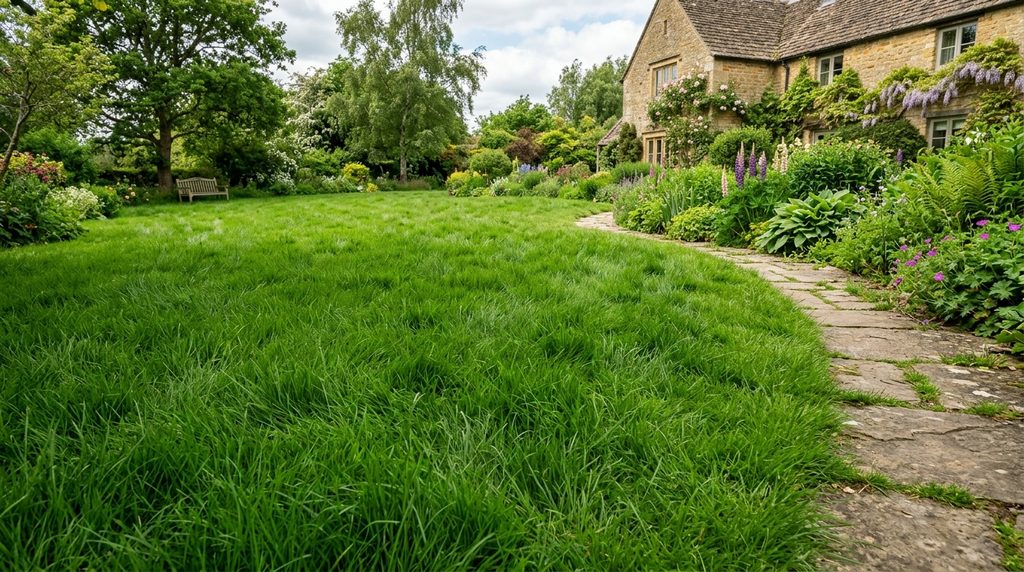
Method 4: Thicken Your Lawn (The Long-Term Fix)
This is the method most homeowners skip — and why they’re spraying herbicide every year. A thick, dense lawn is the single most effective weed prevention tool available.
Weed seeds need light and bare soil to germinate. A thick lawn canopy blocks both. Here’s how to build one:
Overseed thin areas. Fill bare and thin spots with grass seed every fall. Dense turf leaves no room for weeds to establish. See our full guide: How to Overseed a Lawn in Fall.
Aerate annually. Compacted soil weakens grass roots and gives deep-rooted weeds like dandelions a competitive advantage. Core aeration every fall dramatically improves turf density over time. See: How to Aerate a Lawn.
Mow high. Set your mower to 3–4 inches for cool-season grass. Taller grass shades the soil, preventing weed seed germination and reducing soil moisture loss. Low mowing is one of the top causes of weed problems.
Water deeply, not frequently. Water 1 inch per week, applied in 1–2 sessions rather than daily. Deep watering encourages deep roots; shallow daily watering keeps roots near the surface where they’re weak and weed-prone.
Fertilize on schedule. A well-fed lawn grows aggressively and crowds out weeds. For cool-season grass, the most important fertilizer application is in fall (September–November). Spring feeding is secondary.
What NOT to Do
Don’t use non-selective herbicide (Roundup) on your lawn. It will kill your grass along with the weeds. Save it for driveways and sidewalk cracks.
Don’t apply pre-emergent before overseeding. It will prevent your grass seed from germinating. These two tasks need to be separated by at least 8–12 weeks.
Don’t mow right after herbicide application. Wait 2–3 days. You need the herbicide to stay on the weed’s leaves long enough to be absorbed into the root system.
Don’t pull weeds and leave bare spots. An empty patch fills with the next weed seed that lands there. Always follow up with grass seed.
Don’t spray herbicide in extreme heat. Above 90°F, selective herbicides can volatilize and drift onto plants you don’t want to kill, and may stress your lawn grass. Apply in the morning on a mild day.
Frequently Asked Questions
What kills weeds but not grass?
Selective broadleaf herbicides like Ortho WeedClear or Spectracide Weed Stop kill dandelions, clover, and other broadleaf weeds without harming most lawn grasses. For grassy weeds like crabgrass, use a crabgrass-specific selective herbicide. Always check the label to confirm it’s safe for your grass type.
How do I get rid of dandelions permanently?
Spot-treat with a broadleaf herbicide in fall when dandelions are actively moving nutrients to their roots — this is the most effective timing. The herbicide travels down to the root and kills the entire plant. Spring treatment works too but is slightly less effective. After killing them, fill the bare spots with grass seed.
Why do I have so many weeds after overseeding?
New grass takes 2–4 weeks to germinate and months to fully establish. During that window, weed seeds germinate faster and can take over thin areas. Mow weeds (not the new grass) to prevent them from going to seed. Don’t apply herbicide until new grass has been mowed at least 3 times — herbicide will damage young grass.
Is it better to pull weeds or spray them?
Depends on the scale. For a few scattered weeds, pulling is faster and more targeted. For widespread infestations, spraying with a selective herbicide is more efficient. Either way, follow up by seeding any bare areas left behind — otherwise weeds will recolonize the same spots.
Will vinegar kill lawn weeds?
Household vinegar (5% acidity) only burns weed tops and doesn’t kill roots — most weeds grow back. Horticultural vinegar (20–30% acidity) is more effective but kills grass too, making it unsuitable for lawn use. For lawn weeds, selective herbicides are far more effective and safer for your grass.
The Bottom Line
Getting rid of lawn weeds for good requires two things working together: eliminating what’s there now with the right product, and making your lawn thick enough that weeds can’t come back.
Spot-treat existing weeds with a selective herbicide, apply pre-emergent in early spring and fall to block new ones, and overseed thin areas every fall so your grass — not weeds — wins the competition for space. Stay consistent for two seasons and most weed problems resolve themselves.
Related posts (internal links):