
This post contains affiliate links. If you buy through our links, we may earn a small commission at no extra cost to you.
Shower drain clogged with hair? Here are 5 methods that clear most clogs in under 20 minutes — starting with the one that works 80% of the time without any tools.
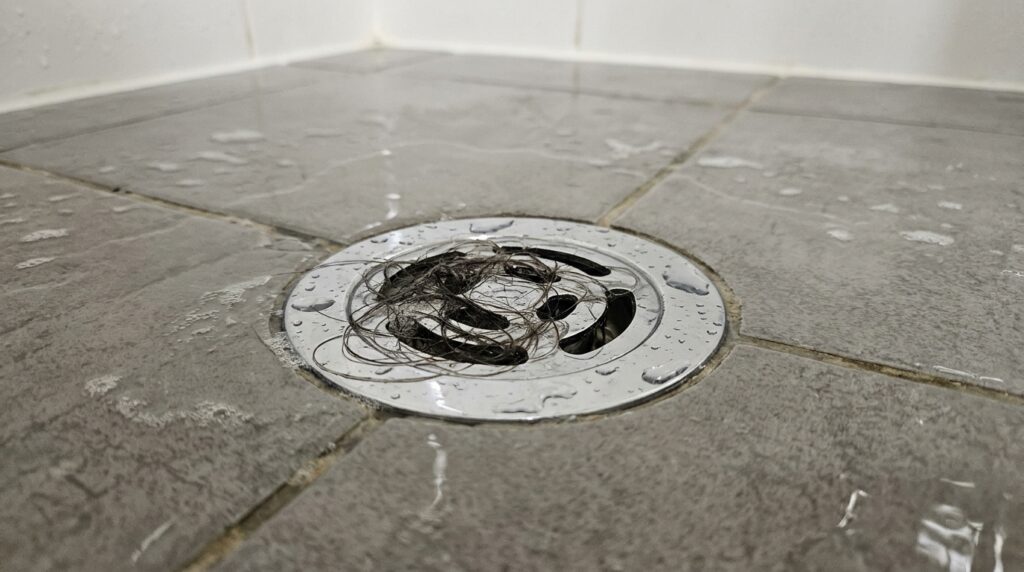
A slow shower drain is almost always hair. It accumulates around the drain cover and just below it, catches soap scum, and builds up until the drain backs up completely. The fix is faster than most people expect — and you almost certainly have everything you need already.
Quick answer: Remove the drain cover, pull out the hair clog with needle-nose pliers or a drain snake, flush with hot water. That’s 80% of shower drain clogs solved in under 10 minutes. If that doesn’t work, work through the methods below in order.
What You’ll Need
Depending on which method you use:
- Screwdriver (to remove drain cover)
- Needle-nose pliers or fingers
- Plastic drain snake / hair clog remover
- Baking soda and white vinegar
- Cup plunger
- Wet rag (to block the overflow)
Our Top Pick — Drain Snake: Drain Snake Clog Remover 6-Pack 25 Inch — flexible plastic with barbs that grab hair on contact, 25 inches long, 6-pack. Around $7.
Our Pick — Hair Catcher (Prevention): TubShroom Ultra Revolutionary Shower Drain Protector — sits inside the drain and catches hair before it clogs, fits 1.5–2 inch drains. Around $15. Install after clearing the clog and you won’t deal with this again for months.
Method 1: Remove the Drain Cover and Pull the Clog Out
Best for: Most shower drain clogs — this is where the hair is.
The hair clog in a shower drain almost always sits right at or just below the drain opening, wrapped around the drain cross-piece or stopper mechanism. You don’t need to snake deep into the pipe for most clogs.
Step 1: Remove the Drain Cover
Most shower drain covers unscrew with a Phillips screwdriver. Some pop off with a flathead. A few just lift straight up. Remove it and set aside.
Step 2: Look and Reach In
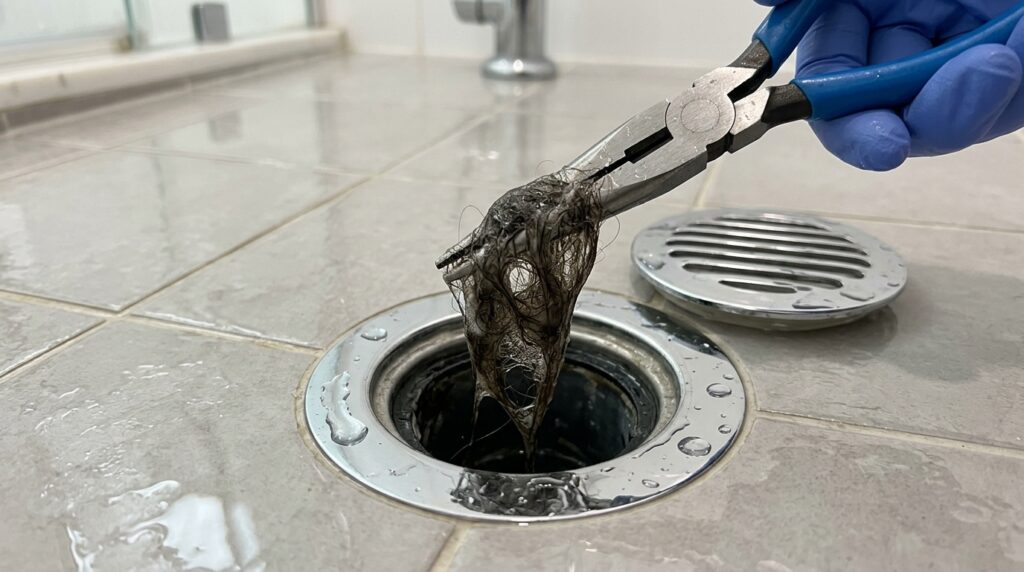
Shine a flashlight into the drain. In most cases, you’ll see a dense clump of hair right there. Grab it with needle-nose pliers, a bent wire hanger, or your fingers (gloves recommended — it’s unpleasant but effective). Pull it out in one piece if possible.
Step 3: Flush with Hot Water
Run the hottest water from your tap for 30–60 seconds to flush any remaining debris. If water drains freely, you’re done.
This method clears the clog completely in 70–80% of cases. If water still drains slowly, continue to Method 2.
Method 2: Plastic Drain Snake
Best for: Hair clogs that extend below the drain opening, or clogs you can feel but can’t reach.
A plastic drain snake (the barbed flexible type) is the most effective tool for shower drain hair clogs. It reaches 18–24 inches into the pipe and grabs hair with its barbs on the way out.
How to Use It
- Insert the snake into the drain and push down slowly, rotating as you go
- When you feel resistance, twist to tangle the barbs in the clog
- Pull out slowly — the hair comes out with the barbs
- Repeat once or twice to catch anything remaining
- Flush with hot water
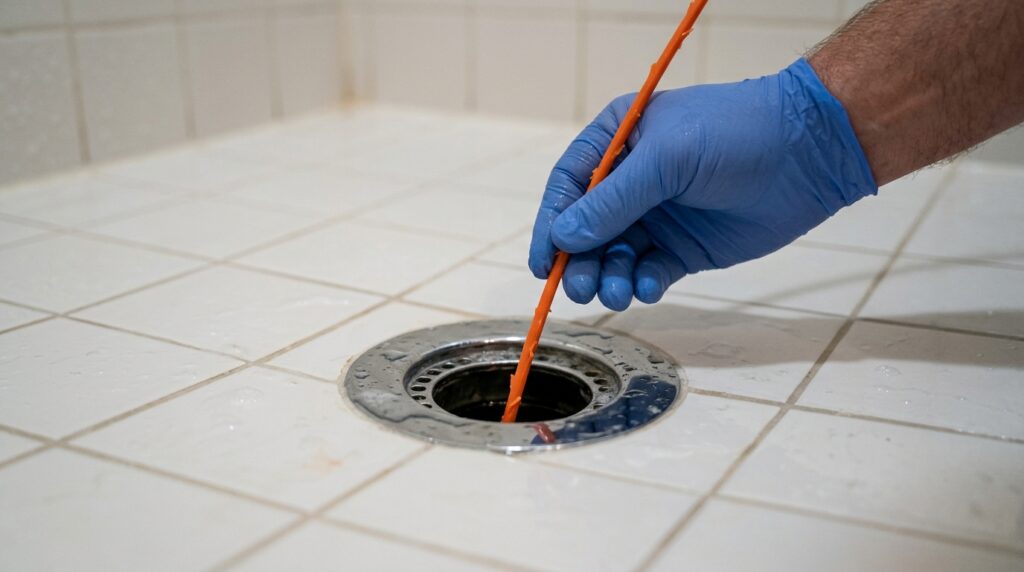
Prepare for what comes out — it’s usually a dense, wet clump of hair and soap scum. Dispose of it in the trash, not back down the drain.
Method 3: Baking Soda and Vinegar Flush
Best for: Soap scum buildup, mild slow drains, monthly maintenance.
This method won’t dissolve a dense hair clog, but it’s effective for soap and mineral buildup that slows drainage even after hair is removed.
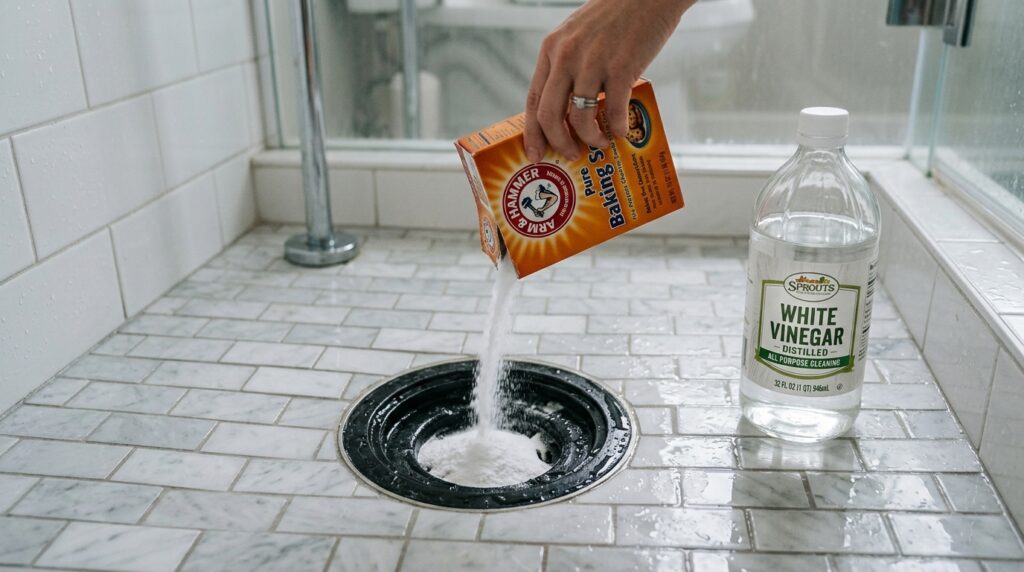
- Pour ½ cup of baking soda directly into the drain
- Follow immediately with ½ cup of white vinegar
- Cover the drain with the drain cover or a rag to direct the reaction downward
- Wait 15–20 minutes
- Flush with the hottest water from your tap for 60 seconds
Use this as a monthly maintenance step to prevent buildup between cleanings.
Method 4: Plunger
Best for: Clogs deeper in the pipe that the snake didn’t reach, or standing water situations.
Use a cup plunger — not a flange plunger (that’s for toilets). The flat cup creates a seal over a flat shower drain.
- Remove enough standing water that the plunger cup can make contact with the drain surface
- Place the cup directly over the drain and press down firmly to create a seal
- Plunge with quick, firm up-and-down strokes — 10–15 pumps
- Pull up sharply on the last stroke to break the seal
- Check if water drains — repeat 2–3 times if needed
Note: Shower drains don’t have an overflow opening like bathroom sinks, so you don’t need to block anything before plunging.
Method 5: Remove and Clean the P-Trap
Best for: Stubborn clogs that none of the above methods cleared.
The P-trap is the curved pipe section directly below the drain that holds water to block sewer gases. Debris can accumulate here, especially in older drain configurations.
Accessing a shower P-trap usually requires removing an access panel (if your shower has one) or working from below in a basement or crawl space. This is the most involved method — if you’ve reached this point without clearing the clog, it may also indicate a deeper line clog that benefits from a professional snake or hydrojetting.
When to Call a Plumber
- Multiple drains in the house are slow simultaneously — main line issue
- You hear gurgling in other drains when the shower runs — vent stack problem
- The clog returns within days of clearing — partial blockage deeper in the line
- Standing water won’t move after all five methods — complete blockage requiring professional equipment
How to Prevent Shower Drain Clogs
Install a hair catcher. This is the single most effective prevention measure. A drain strainer or TubShroom-style insert catches hair before it enters the drain. Clean it weekly — takes 30 seconds.
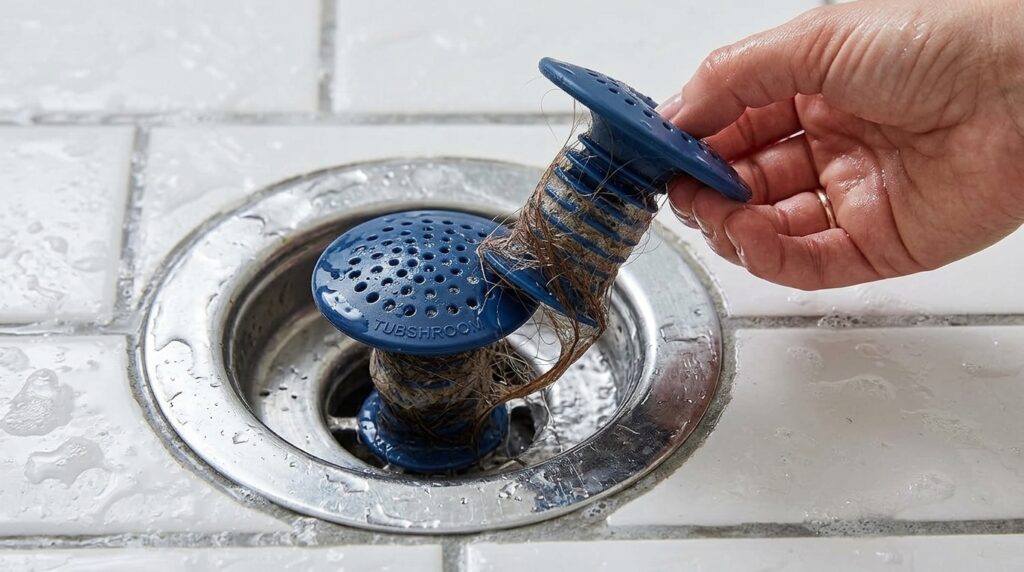
Flush with hot water after every shower. Run the water for 30 extra seconds after turning off the shower. Hot water keeps soap residue moving through the pipe rather than accumulating.
Monthly baking soda flush. Once a month, pour baking soda and vinegar down the drain and flush with hot water. Keeps soap scum from building up between cleanings.
If you’re doing bathroom maintenance, our guide on how to caulk a bathtub covers the other most common bathroom upkeep task — worth doing the same weekend.
Frequently Asked Questions
Why does my shower drain keep clogging even after I clean it? Without a hair catcher, hair enters the drain every shower and rebuilds the clog within weeks. Install a TubShroom or mesh drain cover — it reduces cleaning frequency from monthly to every few months.
Is it safe to use chemical drain cleaners in a shower? Chemical drain cleaners (Drano, Liquid-Plumr) dissolve organic material but have downsides: they can damage older pipes with repeated use, they’re harsh on skin and eyes, and they don’t remove the physical hair mass — they just partially dissolve it, leaving residue that clogs again faster. A drain snake is safer, more effective, and costs less over time.
How do I unclog a shower drain with a screw-in drain cover I can’t remove? Use the plastic drain snake through the openings in the cover without removing it. If the openings are too small, use a bent paperclip or bobby pin to hook hair near the surface. Most screw-in covers can be removed with a Phillips screwdriver even if they look fixed.
My shower drain smells bad even after cleaning. Why? Drain odor after cleaning usually comes from the P-trap — the water seal may have evaporated (common in rarely used showers) or there’s residual biofilm on the pipe walls. Run water for 60 seconds to refill the P-trap. For biofilm odor, pour ½ cup of baking soda followed by boiling water down the drain.
Can I use a drain snake on a shower drain without removing the cover? Yes — most plastic drain snakes are thin enough to fit through standard drain cover openings. If they won’t fit, remove the cover first (usually one screw). It takes 30 seconds and makes the job significantly easier.
The Bottom Line
Shower drain clogs are almost always hair, and hair clogs are almost always sitting right at the drain opening. Remove the cover, pull out the clog, flush with hot water. If that doesn’t work, a $8 drain snake clears what you couldn’t reach by hand.
Install a hair catcher after clearing the clog and you’ll cut your drain cleaning frequency in half.
For other common bathroom plumbing fixes, our guide on how to unclog a bathroom sink drain uses the same approach — same tools, same sequence.
Have questions about your specific drain situation? Leave a comment below.
Related posts: